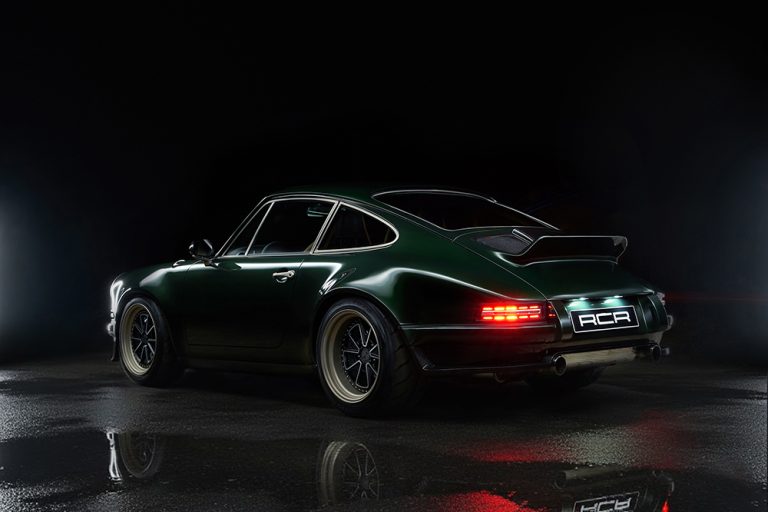
The classic car market in Poland is maturing. We’re talking less and less about purchases driven solely by sentiment, and more and more about informed decisions where emotion meets knowledge, documentation, and build quality.
For many owners, a classic car is no longer just a weekend pleasure. It has become a collector’s item, part of a lifestyle, and sometimes even an alternative form of capital investment. However, this does not change the most important fact: the true value of such a car does not stem solely from its model year, emblem, or paint color. It is built on its history, technical condition, rarity, the quality of the work done on it, and whether the car has something more to offer than just a well-preserved exterior.
A mature market requires greater selectivity
In Poland, there is a growing group of collectors who view classic cars in an increasingly professional light. What matters is not only the car’s appearance, but also its provenance, the authenticity of its documentation, the structural condition of the body, the quality of previous repairs, and the possibility of future maintenance.
This is an important change. Just a few years ago, many purchasing decisions were based mainly on nostalgia. Today, buyers are increasingly asking about a car’s history, documentation, the scope of previous work, the quality of the underlying structure, and the car’s real potential for the years ahead.
A collector’s car is beginning to be treated like a work of applied art. It’s supposed to be beautiful—but not just in photos. It’s supposed to make technical sense. It’s supposed to provide the pleasure of ownership, but also the joy of driving.
Why does the Porsche 911 remain one of the best choices?
When discussing classic cars that continue to attract strong interest from collectors, it’s hard to overlook the Porsche 911. The air-cooled generations, in particular, have remained a benchmark for the market for years.
The reason is simple: the 911 combines a recognizable design, exceptional model continuity, a mechanical character, and a very rich collector’s culture. It is a car that is at once a design icon, a driving machine, and a platform around which a vast ecosystem of specialists, parts, events, and collectors has developed over decades.
In recent years, two trends have attracted particular attention.
The first is production models that are as original as possible—well-preserved, with a clear history, matching numbers, and rare specifications. In this category, authenticity is the greatest asset. Every detail, document, and service decision influences how the car is perceived.
The second trend consists of professionally built restomod and backdate projects. Here, value does not stem from factory originality, but from the quality of the concept, the level of craftsmanship, and the coherence of the entire project. A well-designed restomod does not pretend to be a production classic. It is a contemporary interpretation—a car that retains the character of the classic 911 but offers greater precision, individuality, and practicality.
Restomod: Not Just an Abbreviation, but a Responsibility
The term “restomod” is used very broadly these days. For some, it means a subtle modernization; for others, a complete rebuild of the car from the ground up. In practice, what matters most isn’t the term itself, but the quality of the decisions behind the project.
A good restomod requires consistency. It’s not just about a random collection of attractive parts, a powerful engine, and a new interior. It’s about creating a cohesive car in which the proportions, mechanics, weight, materials, driving position, and driving character all work in harmony.
With the Porsche 911, it’s especially easy to cross the line. Too many embellishments rob the car of its authenticity. An overly aggressive modernization destroys the lightness of the classic form. A too-conservative approach means the design brings nothing new to the table.
That is why the greatest value lies in cars that are built with intention—not as a copy of the past, but as a mature reinterpretation of it.
What should you look for when buying a collector’s car?
Whether we’re talking about a classic production model or a restomod project, a few elements remain key.
1. History and Documentation
A car’s value begins with its history. The more transparent the documentation, the easier it is to assess the car’s actual condition and its potential. This applies to ownership documents, service history, and information about previous repairs, restorations, or modifications.
For classic cars, the consistency of identification numbers, the originality of key components, and the ability to verify the car’s provenance are of particular importance. For restomods, documentation of the restoration process is equally important: the scope of work, the components used, the standard of workmanship, and the accountability of the team that led the project.
2. Structural condition
Appearances can be deceiving. The paint, rims, and interior can be changed relatively easily. It’s much harder to fix poorly done bodywork, hidden corrosion, unprofessional previous repairs, or a base vehicle that shouldn’t have been the starting point for an ambitious project in the first place.
That’s why the structure is what matters most: the body, mounting points, geometry, the quality of previous work, and the car’s overall integrity. This is the foundation upon which value can be built.
3. Rarity and Consistency
The collector’s market rewards limited supply, but rarity alone is not enough. The car’s overall coherence also matters. A rare color, an interesting variant, or a unique level of customization only make sense if the whole car is well-designed and well-built.
In the world of restomods, uniqueness is a natural part of the design. Every car can be different, but it should stem from a single vision. A good design doesn’t look like a random assortment of options. It has its own character.
4. Usability
A collector’s car doesn’t have to be locked away in a garage. More and more discerning owners are looking for cars they can actually drive—not every day, but without feeling like every kilometer is a risk. This is where restomods have the edge. A well-built car can retain the analog character of a classic while offering a greater sense of confidence, precision, and refinement.
Capital, Emotions, and Mechanical Pleasure
Collectible cars are interesting precisely because they bridge several worlds. They have material value, but also emotional value. They are objects that can be analyzed in terms of history, rarity, and documentation, but whose full meaning cannot be understood without driving them.
In a world dominated by digital interfaces, isolation, and automation, classic cars offer something increasingly rare: direct contact with mechanics. The steering wheel, the gas pedal, the brake, the road. A simple relationship between man and machine.
It is precisely this analog driving pleasure that keeps well-built classic cars and restomods attracting the attention of collectors.
RCR Cars’ Outlook
At RCR Cars, we don’t view classic Porsches solely through the lens of market value. For us, proportions, weight, mechanics, materials, and driving dynamics are just as important. A car may be a collector’s item, but it should remain a car—something that makes sense not only in the garage but also on the road.
That’s why every project begins with a conversation, an assessment of the base vehicle, and an understanding of the goal. Building a car designed to stay as true as possible to classic aesthetics is different from creating a more personal project, and even different from building a car focused on an intense driving experience.
RCR is not just a simple restoration. It’s a modern interpretation of a classic Porsche—hand-assembled, one-of-a-kind, and built around the driver.
Built in Poland.
Built for the road.