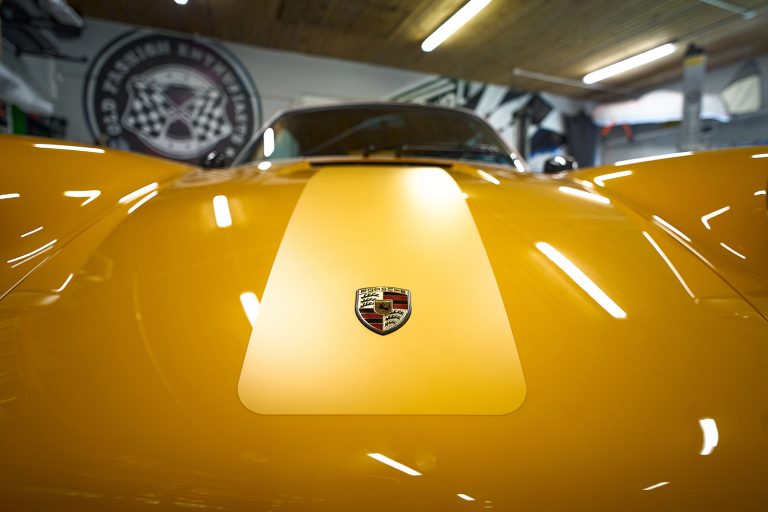
The modern automotive industry is suffering from excess weight. Multimedia systems, miles of cables, autonomous driving modules, and massive batteries make today’s sports cars—despite their immense power—cumbersome. Driving them feels like managing complex software. At RCR, however, we believe in a completely different philosophy. We believe in physics, in inertia, and in the fact that true freedom on the road is achieved not by adding, but by radically subtracting.
At RCR, every gram counts. The body, interior, and details are all optimized for weight, rigidity, and aesthetics. We use lightweight materials such as carbon fiber and aluminum to achieve not only better performance but also a purer driving experience. The result? A car that reacts faster than you can think.This philosophy is our manifesto. It is not a collection of empty marketing slogans, but a rigorous process that takes place every day in our workshop.
Deconstruction of an Icon
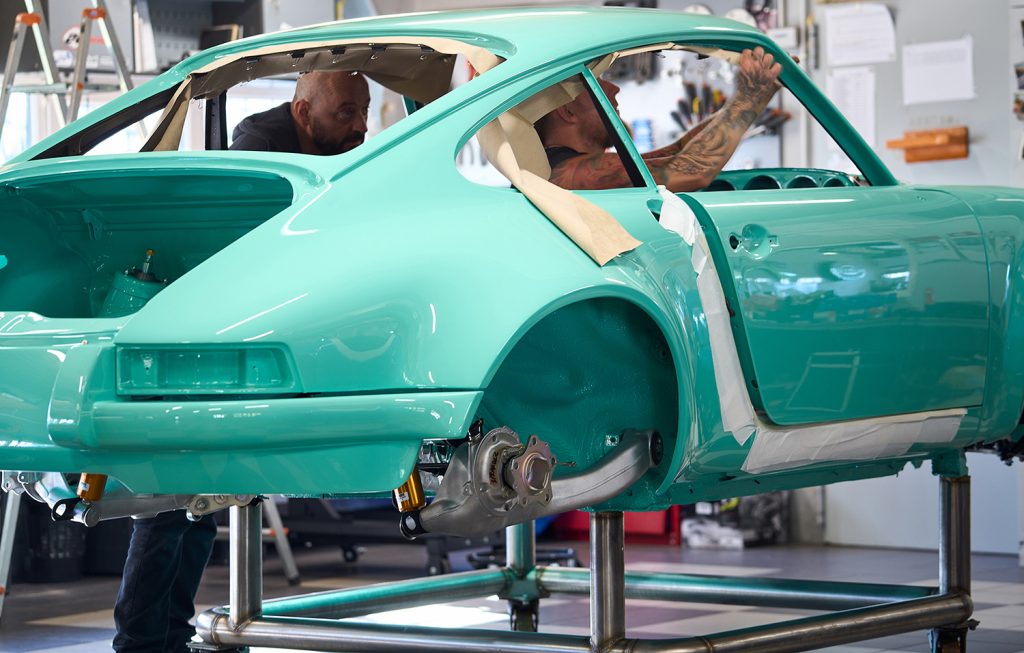
The quest for the perfect weight distribution begins when almost nothing remains of the original 964-generation chassis. The structure, stripped down to bare sheet metal, is a blank canvas for us.
Before applying the paint, the body undergoes surgical modifications. Any component that does not serve a key structural function is removed or replaced with a lighter counterpart. The use of ultralight carbon-fiber panels is not intended solely to sharpen the classic lines—it is a drastic reduction in weight at the vehicle’s highest points, which drastically lowers its center of gravity.
During the painstaking process of fitting seals, windows, and components, there is no room for even a single kilogram of excess weight. Every panel and every curve of the bodywork must combine absolute rigidity with lightness, creating an impenetrable structure for a machine that is meant to become an extension of the driver’s nervous system.
Hidden architecture and unsprung mass
For a car to respond “faster than you can think,” we have to look beneath the surface. The true engineering art of restomod lies where the eye rarely wanders.
Reinforcing the suspension system is a process in which steel gives way to aircraft-grade aluminum. The meticulous assembly of control arms using the original schematics but with materials of a completely new quality is a ritual for us.
This is where the most important battle takes place—the battle for unsprung weight. The suspension components, led by the uncompromising Öhlins shock absorbers, are elements that operate independently of the springs. Drastically reducing their weight makes the wheel react instantly to every bump in the road, and the steering system provides feedback with the precision of a seismograph.
The Mechanical Heart and Stimulus Reduction
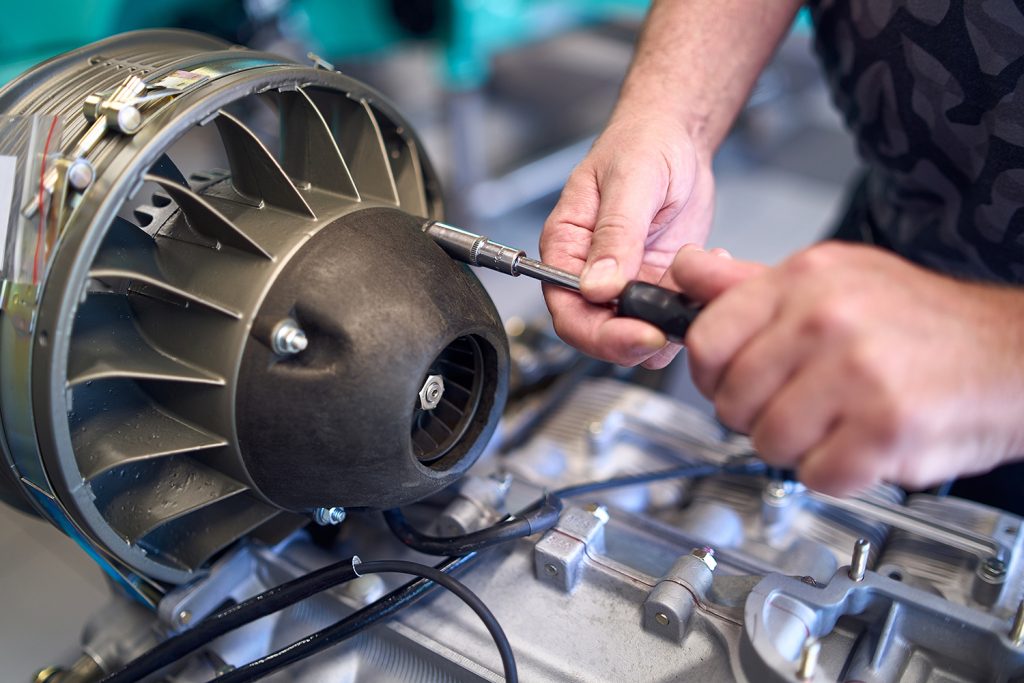
Weight reduction doesn’t spare the beating heart of the machine. The air-cooled engine is an organism in which every rotating component influences just how ferociously the boxer will rev up.
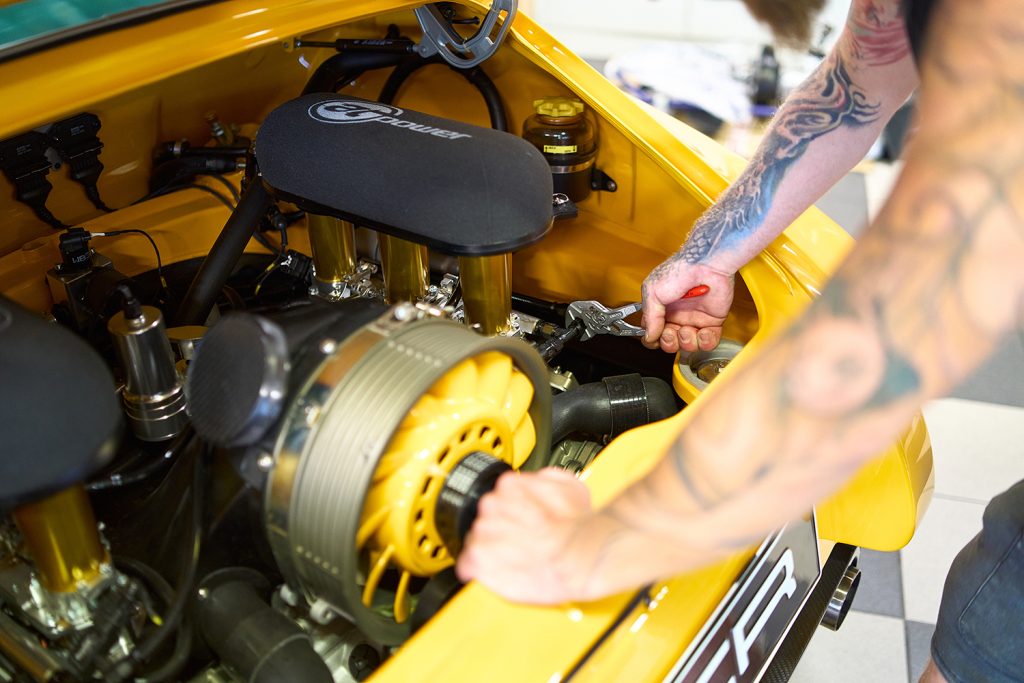
Optimizing the weight of turbines, rotors, and pulleys requires surgical precision. When you look at the finished engine compartment…
…you can see the majesty of mechanics freed from unnecessary plastic. Carbon fiber replaces traditional air intakes and covers, improving thermal performance and shaving off yet another crucial few grams from the rear axle.
We apply the same rigorous standards to the interior.
In RCR designs, the cabin is a space free of distractions and unnecessary luxury. We use strategically placed, ultra-lightweight sound-deadening materials. Classic, heavy leather gives way to advanced, lightweight fabrics and Alcantara, stretched with almost jewel-like precision. The result? An interior that is spartan in nature yet refined in every detail.
Ready to go
All those hundreds of man-hours spent on uncompromising weight optimization have not only a philosophical dimension but also a strictly mathematical one.
The original Porsche 964, as it rolled off the assembly line in Stuttgart, weighed about 1,400 kg. The finished RCR model —with a full tank of fuel, all operating fluids topped off, and fully road-ready—weighs in at 1,195 kg.
Shedding over two hundred kilograms from a classic sports car isn’t an evolution. It’s an engineering leap. When these machines finally roll out on their own wheels and leave the gates of our factory, they are more than just beautiful classics. Thanks to this radical weight reduction, they gain dynamics and agility that cannot be achieved by simply increasing power. It is a pure, unadulterated dialogue between man and the road—physics and art united in a single purpose.