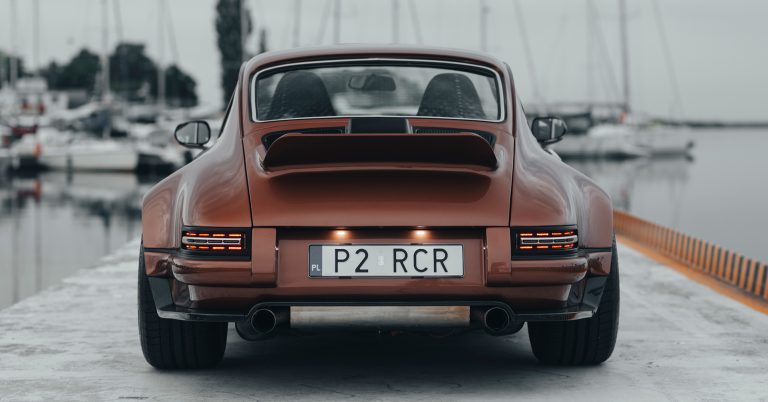
The modern automotive industry is increasingly resembling a sterile office environment. Touchscreens are proliferating, driver-assistance systems are cutting us off from reality, and digital filters are reducing the driver to little more than an operator of a complex operating system. In this rush toward standardization, what once defined the very essence of the automotive world has been lost—the raw, uncompromising dialogue between man and machine.
There are, however, places where time turns back on our terms. Places where physics reigns instead of algorithms, and where metal, leather, and the air-cooled engine of a boxer engine take the place of plastic. This is how the true, uncompromising art of restomod is born.
The Anatomy of a Return to One’s Roots
What exactly is a deep, custom-designed rebuild in the world of contemporary projects? It’s much more than a classic restoration or superficial tuning. It is a profound, almost architectural study of the form and engineering of the legendary Porsche 964, in which a tribute to the past meets the highest standards of modern precision.
This philosophy is guided by a single, overarching principle: everything matters. There is no room here for incidental details or compromises on quality. The process is built on the foundation of three inseparable concepts:
- Restoration: The base is stripped down to bare metal, and its structure is preserved and optimized with surgical precision.
- A Fresh Take: The classic, clean lines of the early 911 models are given new, ultra-lightweight carbon-fiber body panels, while preserving the proportions of the original rally cars.
- Rebirth: A living organism is taking shape, combining the analog character of old machines with the reliability and precision of modern engineering.
Why analog and not digital?
When you turn the key in the ignition switch located to the left of the steering wheel, you enter a world where every sensation has a physical basis. In a modern supercar, the engine sound comes from speakers, and shifting gears is simply a signal sent to a computer. In a meticulously built restomod, it’s a completely different story.
Here, you hear the mechanical hum of the valves at work, feel the subtle vibrations transmitted through the body, and sense the precise, metallic resistance of the gearshift. The scent of warmed leather, the natural aroma of fuel, and the raw, deep roar of the boxer engine behind you form a sensory symphony that no digital synthesizer can replicate. It’s a return to a time when driving wasn’t just a means of transportation, but pure, unadulterated freedom.
Public Reaction and a Dream Come True
The visual presence of such a car on the road evokes emotions entirely different from those of modern, aggressive hypercars. Modern supercars often inspire aloofness or controversy. A Porsche designed in the uncompromising style of a classic, however, evokes something entirely different—widespread respect, admiration, and a nod to pure industrial design.
For many of us, this is the fulfillment of a boyhood dream—an icon that once hung on the wall of our room, brought to life in the 21st century. Passersby stop, drivers of other cars slow down to take a look at the car’s proportions, and you just smile to yourself, holding the thin rim of the classic steering wheel in your hands.
Built for the Road
A finished design isn’t meant to sit in a sterile gallery as a memento of a bygone era. Its place is on the asphalt.
Early morning, empty, winding roads, and a machine that responds to every movement of your foot with immediate, mechanical honesty. This is the ultimate proof that true passion doesn’t need screens. All it needs is space, a driver, and the spirit of motoring in its purest form.